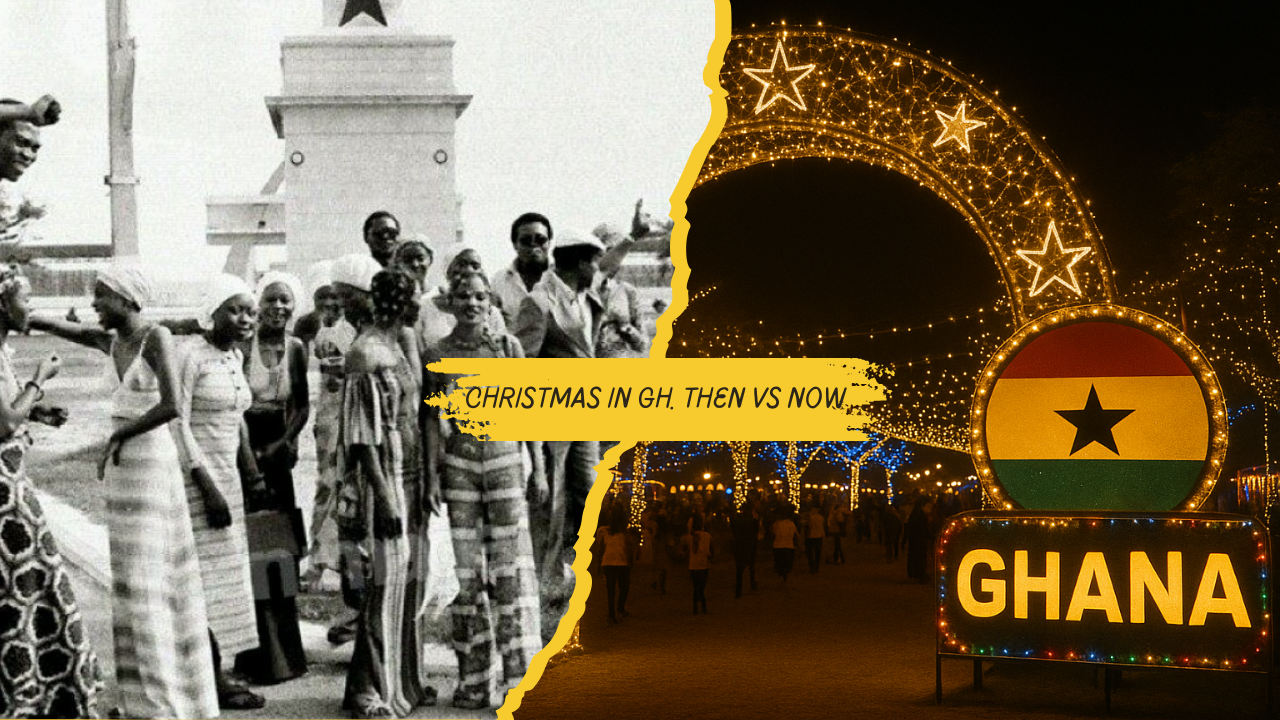
Christmas in Ghana has always been more than a date on the calendar. It is a season of joy, reunion, reflection, and deep cultural meaning. While the essence of Christmas remains rooted in family, faith, and community, the way Ghanaians celebrate today is markedly different from how the season was observed decades ago. Looking at Christmas in Ghana: then versus now offers a fascinating glimpse into how tradition and modernity have blended over time.
Christmas in Ghana Then: Simplicity, Community, and Faith

In the past, particularly before independence and in the early post-independence years, Christmas celebrations in Ghana were modest but deeply meaningful. The season revolved largely around church activities, family bonding, and communal living.
Church services were the heart of Christmas. Carol services, midnight masses, and Christmas Day worship brought entire communities together. Churches were decorated simply, choirs rehearsed for weeks, and children eagerly memorised carols. Attendance was not optional—it was part of the social fabric.
Family was central. Relatives travelled from far and near, often on foot or by lorry, to reunite with loved ones. Homes were filled with laughter, storytelling, and shared meals. New clothes were treasured, not for fashion, but as symbols of renewal and dignity.
Food was prepared with care, often communally. Traditional meals such as fufu with light soup, omo tuo, rice and stew, and locally made drinks were common. Christmas was not about excess but about sharing what was available.
Entertainment was simple. Radios played Christmas highlife, children lit firecrackers, and neighbours visited one another freely. The season reflected core African values: togetherness, gratitude, and respect for elders.
Christmas in Ghana Now: Celebration, Entertainment, and Global Influence

Today, Christmas in Ghana has taken on a more vibrant and commercial character, especially in urban areas. While church services remain important, the festive season has expanded beyond religious observance into a broader cultural celebration.
One of the biggest changes is the rise of “Detty December.” Ghana has become a global December destination, attracting tourists, diaspora Africans, and celebrities. Concerts, street parties, festivals, and nightlife now dominate the season, particularly in Accra.
Fashion has evolved as well. Christmas outfits are now about style and social media presence. Families still buy new clothes, but the emphasis has shifted from necessity to expression.
Food remains important, but menus have expanded. Alongside traditional dishes, homes now serve jollof rice, fried rice, grilled meats, pastries, and international cuisines. Eating out at restaurants and hotels has also become common.
Technology has transformed connection. Christmas greetings are sent via WhatsApp, video calls replace long journeys, and moments are shared instantly online. While this has made communication easier, some argue it has reduced the depth of face-to-face interaction.
What Has Stayed the Same
Despite these changes, some things remain unchanged. Christmas in Ghana is still a time for family reunions, generosity, forgiveness, and reflection. It remains a season when people reach out to the less privileged, visit loved ones, and reconnect with their roots.
The joy of being together, the sound of music in the air, and the spirit of hope continue to define the season.
A Season of Memory and Meaning
Christmas in Ghana, then and now, tells a larger story about cultural adaptation. While modern influences have reshaped celebrations, the core values of community, love, and gratitude endure. As Ghana continues to evolve, Christmas remains a powerful reminder of who we were, who we are, and what truly matters.
At Ten30news, remembering the past helps us celebrate the present with deeper meaning.
