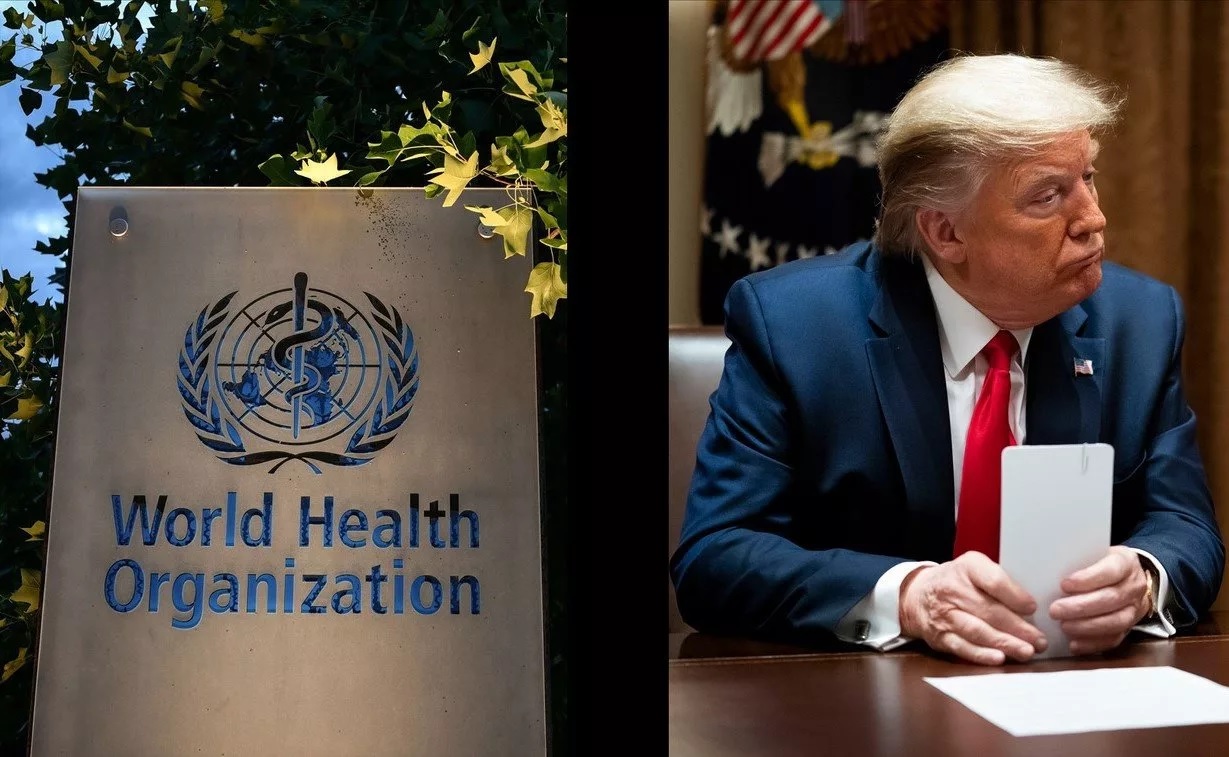
The United States’ formal withdrawal from the World Health Organization (WHO) — announced via an executive order early in 2025 and completed in January 2026 — has alarmed public health experts and African governments alike. Critics warn that the loss of US funding and leadership threatens to slow or even reverse years of progress against infectious diseases, routine immunisation, disease surveillance and emergency response systems that have helped save millions of lives across the continent.
As a founding member and historically the largest contributor to WHO funding, the US provided not only financial resources but also technical support, research collaboration and global coordination capacity — elements now weakened by its departure.
What the WHO Withdrawal Means
Under Executive Order 14155, signed by President Donald Trump on 20 January 2025, the United States initiated its withdrawal from WHO membership, ending decades of formal participation and financial commitments to the global health body.
The WHO has publicly expressed regret at the decision, emphasising that US contributions helped drive major global health achievements, including progress against polio, HIV, Ebola, malaria, tuberculosis and neglected tropical diseases. It warned the move could make both the US and the rest of the world “less safe” from health threats and pandemic risks.
Impact on Africa’s Health Systems
Funding Gaps and Programme Cuts
Africa has experienced the largest reductions in WHO funding regionally, losing more than US $150 million for operations across its 47 member states after the withdrawal and broader budget shortfalls. Many essential programmes in disease prevention, vaccine distribution and health workforce training now face reduced reach and capacity.
Read Also: France Moves to Abolish Legal Marital Duty to Have Sex, Ending ‘Conjugal Rights’
The shortfall comes at a time when multiple infectious disease threats remain active, including malaria, HIV/AIDS and tuberculosis. Without stable funding, national health systems may struggle to maintain treatment continuity, immunisation campaigns, and outbreak response — processes that historically depended on predictable WHO partnerships.
Rising Health Costs and Inequities
Without WHO support, some countries could be forced to divert scarce resources to fill gaps, increasing healthcare costs for households and deepening inequities. Reduced funding also jeopardises maternal and child health programmes, routine vaccination drives, emergency preparedness and disease surveillance systems that protect against epidemics.
Broader Consequences
Technical Capacity and Workforce
The loss of US financial support has already contributed to budget cuts within the WHO, prompting staff reductions and reductions in technical programme capacity. These cuts weaken institutional memory and the organisation’s ability to coordinate complex global health actions — especially in low-resource settings.
Future of Disease Prevention Initiatives
Disease control efforts such as HIV/AIDS prevention and immunisation rely on coordinated systems that pool global data and expertise. The exit of a major funder reduces the predictability and effectiveness of these systems, potentially compromising achievements like sustained polio eradication and progress toward ending malaria deaths.
African Responses and the Path Forward
African health and government leaders have repeatedly called for increased domestic and regional investment in healthcare, emphasising that reliance on external donors is no longer sustainable. Strengthening national budgets, expanding local capacity and enhancing regional health institutions like the Africa Centres for Disease Control and Prevention (Africa CDC) are also priorities to help cushion the impact of global funding shifts.
Health experts stress that a sudden withdrawal of support presents risks, particularly for vulnerable populations, but also serves as a wake-up call for long-term health financing strategies that reduce dependence on external donors.
Conclusion
The US withdrawal from WHO marks a historic shift in global health architecture. For many African countries, the immediate effects include shrinking resources for infectious disease control, weakened surveillance systems, and greater pressure on national health services. The decision underscores how global health progress is interconnected, and how major policy shifts by large donors can ripple across regions, potentially undermining hard-won gains unless mitigated by strategic domestic actions and diversified funding.
