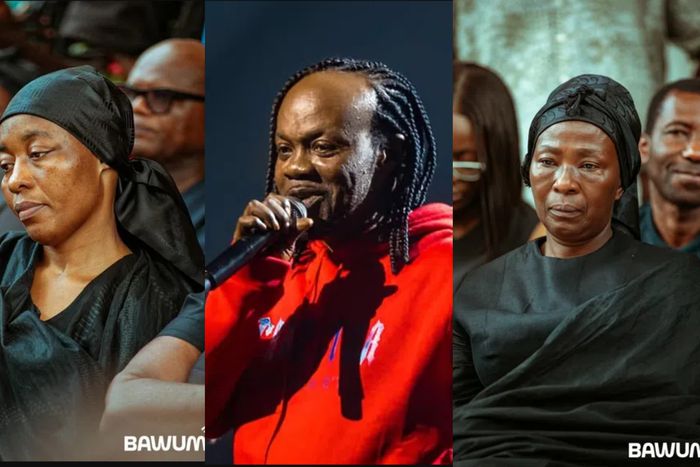
Barely a month after the burial of Ghanaian highlife icon Daddy Lumba on 13 December 2025, a legal dispute has erupted over the management and distribution of his estate. What was expected to be a period of quiet reflection has quickly turned into a courtroom battle involving 19 properties and assets claimed by different members of the late musician’s family.
The case now before the Kumasi High Court is not just about wealth; it touches on questions of legacy, family law, customary practices, and the legal authority to administer estates in Ghana. With competing claims and formal legal challenges, the future of Daddy Lumba’s estate remains uncertain.
Why the Dispute Has Arisen
Daddy Lumba’s widow, Akosua Serwaa, alongside his elder sister Ernestina Fosu and daughter Charlyn Fosu, has applied to the Kumasi High Court for letters of administration — a legal authority enabling them to oversee and distribute the late singer’s assets. As part of that application, they listed 19 major properties and assets that they say belong to Daddy Lumba’s estate.
However, the process has been contested. One of Daddy Lumba’s other wives, Priscilla Ofori — popularly known as Odo Broni — filed a caveat through her legal representatives. Her lawyers argue that the existence of another legally recognised spouse prevents any single party from managing the estate alone. With the caveat filed, the court must now carefully determine who has the legal right to administer the late musician’s assets.
The 19 Properties and Assets in Question
Below is a breakdown of the main properties and assets that have been listed as part of Daddy Lumba’s estate, along with their approximate values where available:
-
Half of a house at Dome, Accra – GH¢500,000
-
Half of a house at West Legon, Accra – GH¢500,000
-
Half of a house at Tantra Hills, Accra – GH¢400,000
-
Half of a rented house at Tantra, Accra – GH¢500,000
-
Half of House No. GA3329264, East Legon, Accra – GH¢600,000
-
Half of a plot of land at Tantra Hills, Accra – GH¢200,000
-
Half of a six-storey uncompleted building at Kasoa Toll Booth – GH¢600,000
-
Half of a five-storey house at Kasoa Toll Booth (near Asamoah Gyan’s residence) – GH¢600,000
-
Half of 20 plots of land at Tuba, Kasoa – GH¢400,000
-
Half of 30 plots with estate housing at Obom, Kasoa – GH¢600,000
-
Half of four plots at Amasaman – GH¢100,000
-
Half of two plots at Kwaadaso, Kumasi – GH¢50,000
-
Half of one plot at Appiadu, Kumasi – GH¢20,000
-
Half of a plot at Tesano, Accra – GH¢20,000
-
Half of DLFM (radio station), Accra – GH¢10,000
-
Half of DL Water business, Accra – GH¢10,000
-
Half of eight private cars – GH¢200,000
-
Half of two plots at Daban, Kumasi – GH¢100,000
-
Personal effects – GH¢20,000
(Totals and valuations based on court filings and media reports.)
Taken together, these properties and assets represent several millions of Ghana cedis in combined value.
Legal Arguments and Contesting Parties
The dispute hinges on who has legal authority to manage and distribute Daddy Lumba’s estate — a matter that is not always straightforward under Ghanaian law when multiple recognised spouses or family members are involved.
-
Akosua Serwaa, Ernestina Fosu, and Charlyn Fosu argue that they should be granted letters of administration to manage the estate, a move that would give them legal control over the properties.
-
Priscilla “Odo Broni” Ofori has filed a caveat through her lawyers, asserting that her status as a legally recognised spouse prevents any one party from acting alone.
Previously, the Kumasi High Court ruled that both Akosua Serwaa and Odo Broni are legally recognised as surviving spouses of Daddy Lumba. This recognition complicates the estate distribution process, as Ghana’s customary and statutory laws often require clear legal authority before estate administration can proceed.
Another legal voice in the dispute — Lawyer Kusi, representing Akosua Serwaa — has insisted that she remained married to Daddy Lumba until his death, arguing that there was no formal dissolution of their marriage. This further underscores the complexity of determining marital status, estate rights, and customary recognition in the case.
What This Means for the Family and Legacy
This dispute illustrates how estate matters can become complex when several family members, customary practices, and legal recognitions intersect. What was intended to be a period of mourning for Ghana’s music community has instead become a high-profile legal contest with implications for inheritance law and the management of public figures’ estates.
As the Kumasi High Court reviews evidence and arguments from both sides, the final outcome will determine not only who manages the late musician’s assets, but also how his legacy is preserved and shared with those closest to him.
Conclusion
The case over Daddy Lumba’s estate and its 19 listed properties is a reminder of the legal and emotional challenges that can follow the death of a public figure, especially when multiple family members and legal recognitions are involved. As the court process unfolds, observers and fans alike will be watching how Ghana’s legal system balances customary practices, statutory law, and family rights in resolving the dispute.
